

The plant is poisonous.
Application
Alrune has been used as medicine for more than 2000 years, primarily as an anesthetic and anticonvulsant.
Alrune was considered a powerful magical herb. It brought good luck to its owner, who could expect to win both in gambling and in love.
The myth was that the plant grew on gallows mounds where innocent young men had been hanged. Where the bodily fluids of the hanged man hit the ground, the elderberry would grow. To be effective, the elderberry root had to be dug up at night during a full moon. When it left the ground, it would let out a scream that would make people fall over dead. Therefore, you had to pull it up by digging it almost free and then tie a black dog or a rooster to the plant and let the animal pull the plant free. The animal would die from the plant's scream. You yourself had to hide behind a bush with your fingers in your ears to protect yourself from the scream. When you heard the scream, the plant was up. Then you had to throw holy water into the plant hole and run home before the devil got you.
Once home, the root had to be washed and wrapped in clean linen. The alder root had to be treated with respect, as it could otherwise cause misfortune. An alder that was no longer auspicious had to be sold for less than it was purchased for.
There are several myths and stories about the plant. For example, the plant would scream after night travelers and the juice from the root was included in witches' flying ointment.
Alrune was used as medicine for all sorts of diseases.
Alrune is no longer used as a herbal medicine.
Ingredients
A mixture of alkaloids mainly hyoscyamine and scopolamine
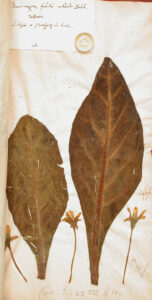
Photo of page from Joachim Burser's herbarium with the plant.