Restoration of Kongsøhav's fishing lodge
Kongsøhav jættestue is being restored by the Danish Agency for Palaces and Culture in collaboration with Morsø Forest and Nature Service and Museum West Zealand.
Experienced employees from the Danish Agency for Palaces and Culture are responsible for the restoration work, while archaeologists from Museum Vestsjælland participate in the work and registrations along the way. The construction work is handled by Morsø Skov- og Natur-service.
Kongsøhav giant's room
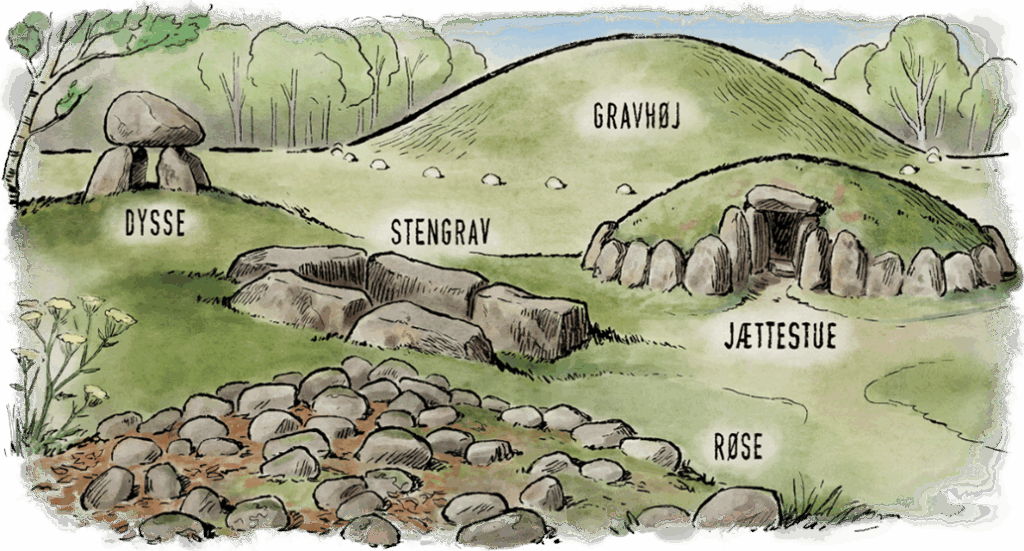
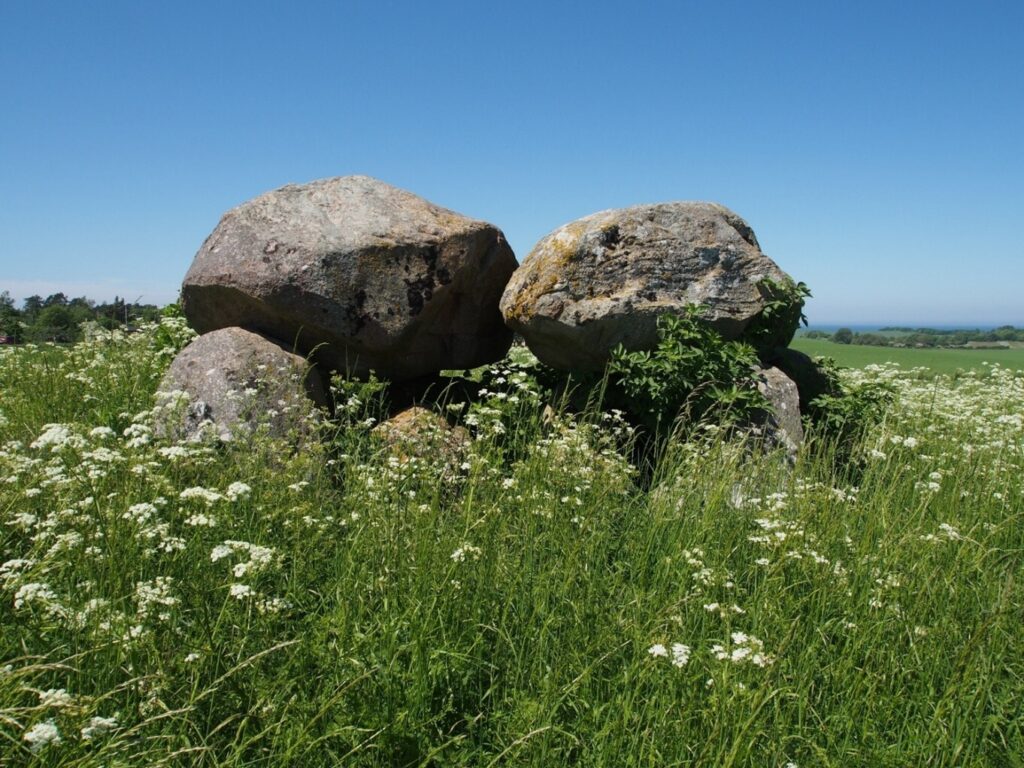
Kongsøhav, or Kongsøhøv, or Kongshøj jættestue – One of the many landmarks of the Neolithic Age on the Røsnæs peninsula. Seen from the road, it most closely resembles a dolmen, of which there are also several examples in the area. But that is because something is missing from it: It was once twice as long as it is now and it had a long passage to the east and was at least partially covered by an earthen mound.
But at some point, probably in the mid-1800th century, a large part of the stone structure disappeared. The large stones were probably removed – perhaps blown up – either to use them as building material or because they were a nuisance during agricultural work. In this way, many of the country's dolmens and giant's chambers were lost.
A large part of the Kongsøhav jættestue still stands, and it was protected in 1941, but the approximately 5000 years of wind, weather and field work have worn it down and led to the earth mound around the burial chamber almost disappearing. The visible remains of the stone chamber today stand exposed and exposed in the landscape. The side walls have begun to give way, and the large capstone is threatening to slide down.
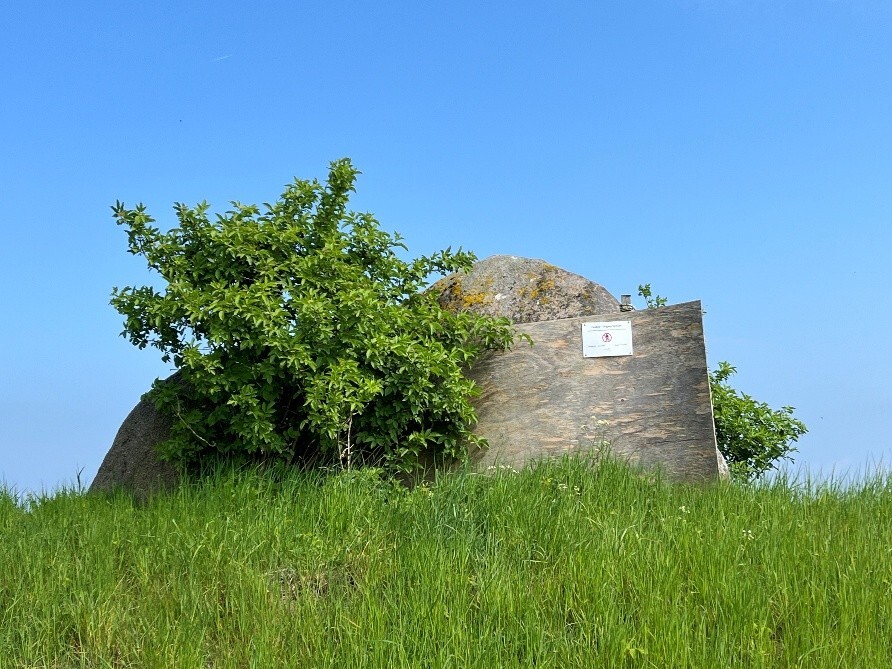
In 2021, the giant's room was therefore sealed off when there was a risk of collapse, and since then the giant's room has been hidden behind protective tape and chipboard - waiting for a rescue.
It is therefore a great joy that new grants from the Danish Parliament now make it possible for the Danish Agency for Palaces and Culture to restore and secure the giant's den. Soon Kongsøhav will once again stand as a visible landmark along Røsnæsvej – and remind us all of the cultural landscape and history of which we are a part.
The restoration process - what needs to happen
The restoration is carried out by lifting the capstones off with a crane. The supporting stone must then be straightened and secured. The chamber must be cleaned up with a gentle hand. and subsequently a little of the missing mound must be built up around the stones again to secure the giant's chamber for the future.
The restoration will take place in May, and visitors will have the opportunity to see the giant room and hear about the work at an open house event.
Giant rooms
The Jættestuerne were built as communal graves around 5000 years ago. The Jættestuerne were the culmination of a period of the Neolithic period, when these monumental burial monuments were built. In contrast to the dolmens, which are older than the Jættestuerne, Jættestuerne has a long narrow passage across the chamber. Hence the name “passage building”. The passage makes it possible to visit the chamber again and again.
By the standards of the time, the construction of the giant mounds required very large resources and they were only built for a relatively short period of time, around 3300 BC, but after that they were used for burials throughout the rest of the Neolithic Age and until the beginning of the Bronze Age (1700 BC). The mounds often also contain urn graves from the Late Bronze Age.
In Denmark, there are approximately 500 giant caves, but there may have been ten times as many. Giant caves got their name because it was believed in folklore that these large monuments were built by beings with supernatural powers – such as giants.